Journal
How Pixar movies have been secretly teaching us UX principles

Jun 17, 2024
UX PRINCIPLES
Popular
Walking out of 'Inside Out 2' with my mind buzzing, I suddenly realized that Pixar has been my sneaky UX design teacher all these years.
The credits rolled, and the lights flickered on in the theater. I blinked, adjusting to the brightness, as the world of “Inside Out 2” slowly fades from view. But the emotions it stirred? Those were just getting started. My mind was a whirlwind of colors, memories, and revelations. It’s not just about Riley’s teenage adventures or the new emotions introduced in her mind. It’s about my own journey — as a person, as a UX designer, and as a lifelong Pixar fan.
As I sat in the cafeteria of the theater sipping on an iced latte, I can’t help but marvel at how Pixar’s storytelling has shaped not just my childhood, but my professional life too. As I watch a group of kids excitedly discussing their favorite Pixar characters at the next table, I’m struck by a realization: these movies have been teaching us valuable lessons about user experience all along.
Let’s rewind a bit. Remember when “Inside Out” first hit the theaters? Little did I know that a colorful cast of emotions inside an 11-year-old’s head would provide such profound insights into user psychology.
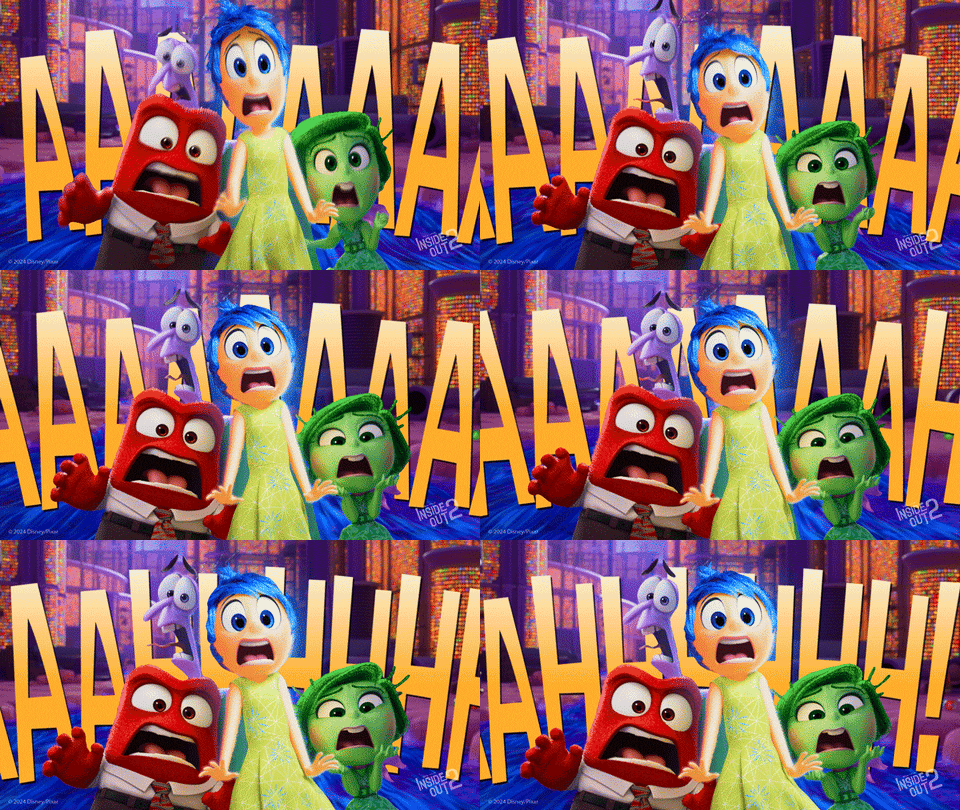
Joy, Sadness, Anger, Fear, and Disgust — aren’t these the very emotions we as UX professionals strive to understand and design for? How often have we encountered users experiencing a mixture of these emotions while interacting with a product? As Joy says, “Do you ever look at someone and wonder, ‘What is going on inside their head?’” Well, that’s essentially what we do in UX research!
The movie taught us that all emotions have their place and purpose, much like how different elements in our designs serve specific functions. Remember when Sadness says, “Crying helps me slow down and obsess over the weight of life’s problems.” It reminds us that even negative user experiences can provide valuable insights and opportunities for improvement.
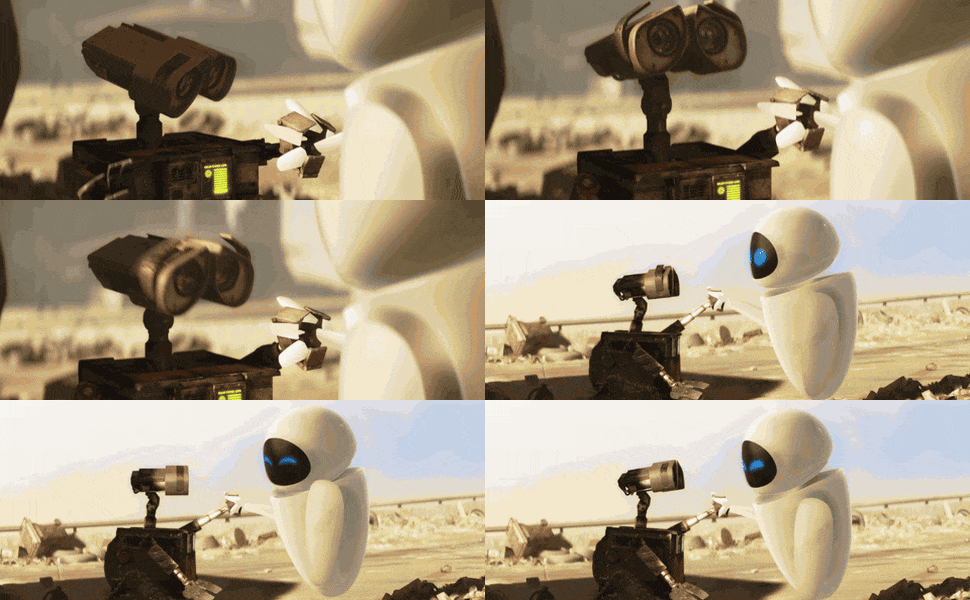
But it’s not just “Inside Out” that’s been secretly schooling us in UX principles. Take “Wall-E” for instance. Remember the scene where Wall-E is introduced to Eve’s sleek, high-tech design? It’s a masterclass in the importance of emotional design. Wall-E, with his rusty, clunky exterior, manages to form a connection with users (in this case, the audience) through his expressive eyes and endearing personality. When Wall-E simply says “Eeeev-a” with such tenderness, it’s a reminder that while aesthetic appeal is important, it’s the ability to forge an emotional connection that truly makes a design memorable.
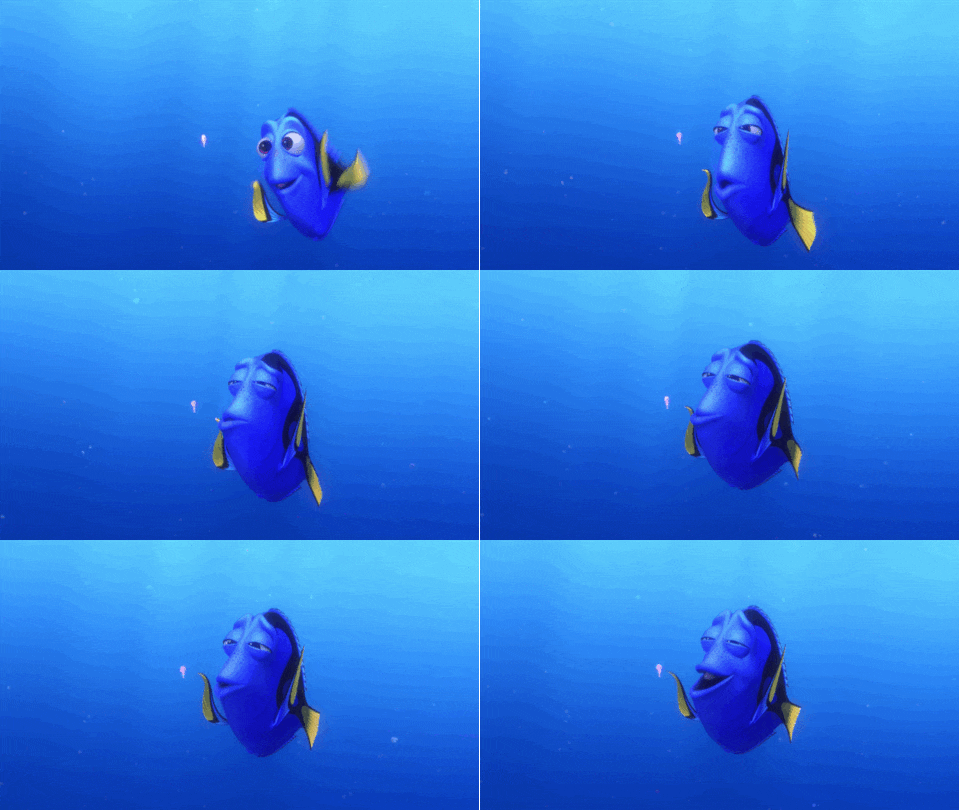
As I took another sip of my latte, I chuckled at the memory of Dory from “Finding Nemo” and her famous “just keep swimming” mantra. How many times has that line echoed in my head during long user testing sessions or when facing a particularly challenging design problem?
Dory’s wisdom rings true: “When life gets you down, you know what you gotta do? Just keep swimming, just keep swimming, just keep swimming, swimming, swimming.” In our field, persistence is key. We keep iterating, keep testing, keep improving — or in Dory’s words, we just keep swimming.
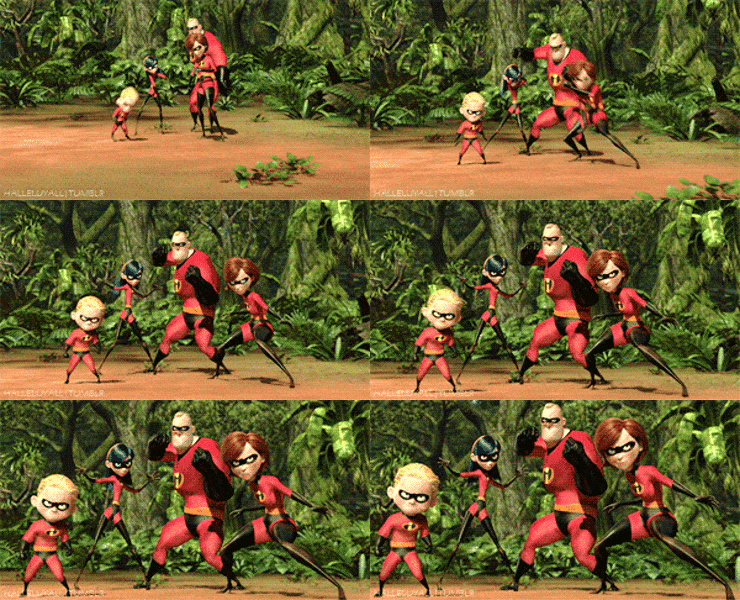
The kids at the next table then moved on to debating whether Mr. Incredible or Elastigirl is the better superhero. Their animated discussion reminded me of “The Incredibles” and its sequel, which, believe it or not, taught me a lot about teamwork and adapting to change — crucial skills in any UX team.
As UX professionals, we often need to stretch ourselves (pun intended) to accommodate new technologies, changing user needs, and evolving business requirements. We need to be as flexible as Elastigirl, as strong as Mr. Incredible, as fast as Dash, and as adaptable as Jack-Jack. As Elastigirl says, “I have to succeed, so the rest of you can have that choice!” That’s the responsibility we bear in UX — to create successful experiences that give users the best possible choices.
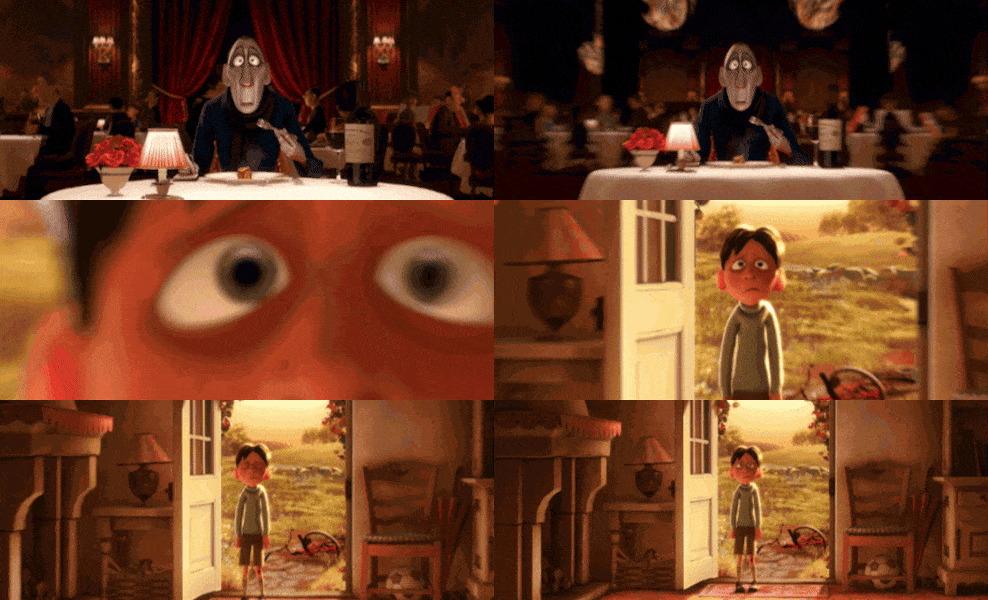
The sun was setting up by now so I decided to head back home. As I stepped out into the warm evening air, I was reminded of the scene in “Ratatouille” where food critic Anton Ego tastes Remy’s dish and is instantly transported back to his childhood. That’s what great UX design should do — create experiences so intuitive and delightful that they feel like coming home. As Ego eloquently puts it, “The new needs friends.” In UX, we’re constantly introducing the new, and our job is to make it feel like a long-lost friend to our users.
Walking down the bustling street, I smiled to myself. Who would have thought that a bunch of animated movies would end up being some of the best UX mentors I’ve ever had? But then again, isn’t that what great design is all about? Taking complex ideas and presenting them in a way that’s accessible, engaging, and meaningful to everyone — whether they’re 5 or 50.
I realized that my journey in UX, much like Pixar’s storytelling, is an ongoing adventure. There’s always more to learn, more to explore, and more to create. After all, in the world of UX and Pixar alike, the story never really ends. It just keeps evolving, one frame, one user, one emotion at a time.