Journal
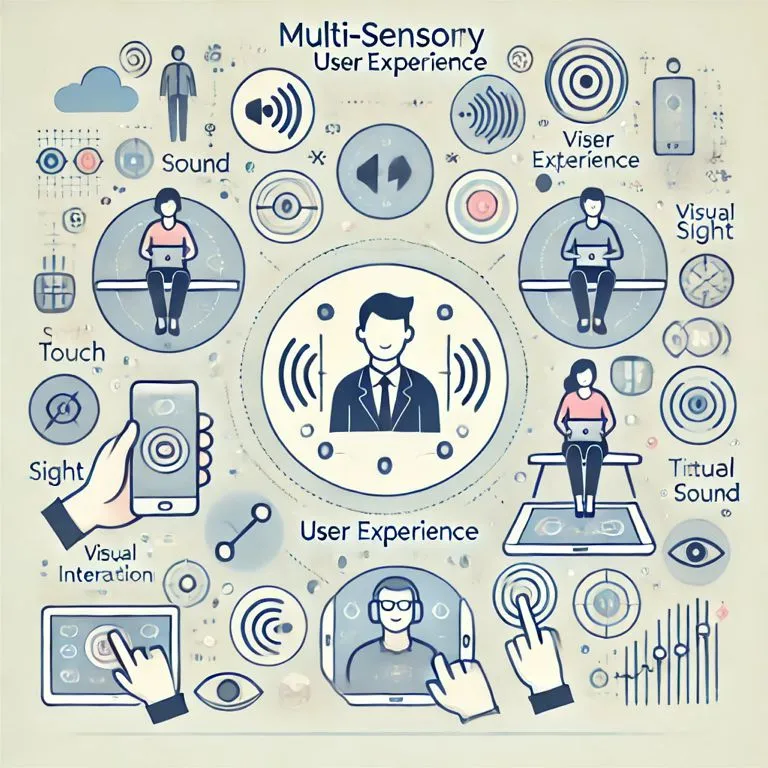
Could multi-sensory UX be the key to more immersive digital experiences?
Jul 15, 2024
Multi-Sensory
That moment when I first smelled perfume from a magazine page as a kid got me thinking about how we might experience the digital world with more than just our eyes someday.
I’ll never forget the day my world expanded beyond sight and sound. I was just a kid, lazily flipping through my mom’s fashion magazine, more interested in the glossy pictures than the words. That’s when I stumbled upon a perfume advertisement, sleek and alluring. But what caught my eye was a small circle at the corner of the page with two words: “Rub me.” Intrigued, I did as instructed. I lifted my hand to my nose and inhaled. Suddenly, as if by magic, a delicate floral scent filled my nostrils. My eyes widened in disbelief. The very fragrance being advertised was right there, clinging to my fingertips! I must have spent the next hour rubbing that spot and sniffing my hand, marveling at how a simple page could transfer such a complex aroma.
That showed me that experiences could transcend the visual, that technology and creativity could work together to engage multiple senses at once. Little did I know that this childhood wonder would foreshadow a future where digital experiences would strive to incorporate not just sight and sound, but smell, taste, and touch as well.
Fast forward to today, and we’re standing on the precipice of a sensory revolution in user experience (UX) design. Remember my magazine moment? Well, tech wizards have taken that concept and cranked it up to eleven.
Imagine scrolling through your phone and catching a whiff of freshly baked cookies from your favorite bakery’s app. Sounds like science fiction, right? But companies like Scentee and oNotes made this a reality in 2014 with smartphone attachments that can release scents triggered by digital content. It’s like having a tiny perfumery in your pocket!
Now, you might be thinking, “Sure, this sounds cool, but what’s the point?” Well, let me paint you a picture. Imagine shopping for perfume online, but instead of relying on flowery descriptions, you could actually smell the fragrance through your device. Or picture a virtual reality cooking class where you can smell the spices.The possibilities are mind-boggling!
But let’s not get ahead of ourselves. As exciting as this frontier is, it’s not without its challenges. For one, our noses and taste buds are incredibly complex and personal. What smells like roses to me might smell like old socks to you. And let’s not even get started on the technical challenges of creating devices that can reproduce the infinite variety of smells and tastes in the world. There are also some serious ethical considerations to ponder.
Despite these hurdles, the potential benefits are too tantalizing to ignore. Enhanced learning experiences, more immersive entertainment, even applications in healthcare for diagnosing and treating sensory disorders — the possibilities seem endless.
So the next time you’re scrolling through your phone or browsing the web, take a moment to imagine what it would be like if you could smell, taste, and feel what you’re seeing. Because if the brilliant minds working on sensory UX have anything to say about it, that future might be closer than you think.